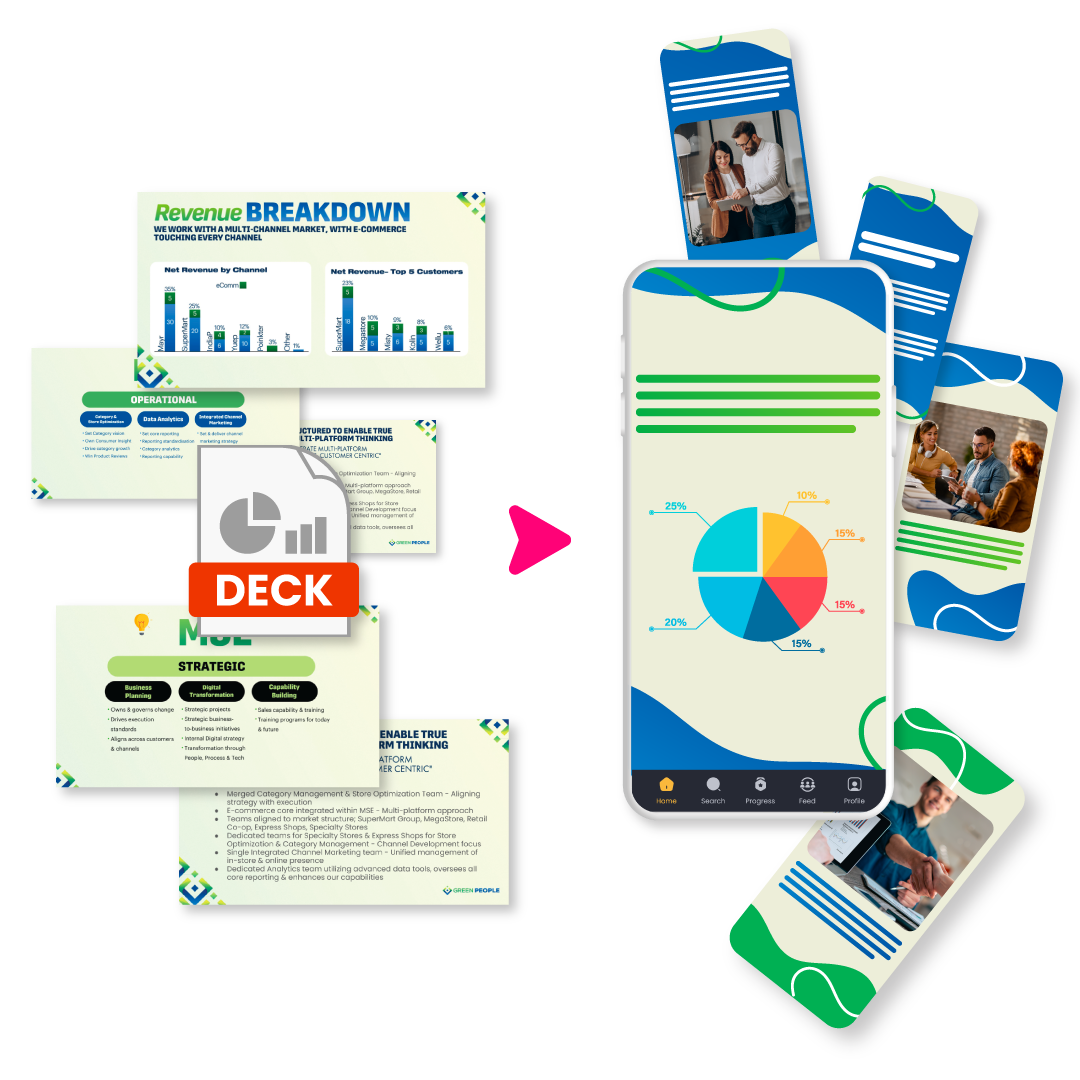
Bite-size your internal training at the touch of a button
Our AI system automatically converts your content to exciting and engaging bite-sized lessons in any format you want. Shorten training by 60 - 80%, boost engagement, and accelerate ramp by 3- 5x.

Critical Incident Stress Management Training
Evidence-based training on managing trauma, providing psychological first aid, crisis intervention strategies, and building resilience in UK workplace contexts, aligned with the Health and Safety at Work Act and HSE guidelines
Why Critical Incident Stress Management Training Is Essential
In UK workplaces, critical incidents—those sudden, unexpected events that overwhelm our normal coping mechanisms—affect thousands of employees annually. Whether you work in emergency services, healthcare, education, or corporate settings, understanding how to respond is vital for maintaining workplace wellbeing. Under UK Health and Safety Executive guidelines, critical incidents include workplace fatalities, serious injuries, violent attacks, natural disasters affecting your workplace, or witnessing traumatic events. Recent statistics show that 1 in 3 UK workers will experience a critical incident during their career, making this training essential for everyone.
When we encounter such events, our bodies and minds react automatically through the fight, flight, or freeze response. This acute stress response, whilst normal, can develop into more serious conditions if not properly managed. The HSE's Management Standards identify six key factors that influence our stress response: demands, control, support, relationships, role clarity, and organisational change. The impact extends beyond individuals—organisations may experience increased absence rates, reduced productivity, higher staff turnover, and potential legal implications under the Health and Safety at Work Act 1974. UK businesses lose approximately £5.2 billion annually due to work-related stress, with critical incidents being a significant contributor.
Why This Training Is Essential for Your Organisation
This training equips learners with evidence-based techniques to manage trauma, reduce burnout, and foster resilience in UK workplace contexts. Aligned with the UK Health and Safety at Work Act and HSE guidelines, the course covers psychological first aid using the RAPID model endorsed by Public Health England and aligned with NHS mental health first aid standards, crisis intervention strategies following NICE guidelines for preventing post-traumatic stress disorder, and legal frameworks including UK GDPR, the Care Act 2014, and the Mental Capacity Act.
Experiencing stress after a critical incident is not weakness—it is human. By understanding these responses, organisations create psychologically safe workplaces where colleagues feel supported. In the immediate aftermath of an incident—typically the first 48 hours—watch for warning signs including intrusive thoughts or flashbacks, difficulty concentrating, sleep disturbances, emotional numbness or heightened anxiety, physical symptoms like headaches or digestive issues, and social withdrawal. Recognising these early indicators allows for timely intervention and contributes to a resilient organisational culture that protects everyone's mental health and wellbeing.
🎯 Learning Outcomes
Understand Critical Incidents and Their Impact
Recognise what constitutes a critical incident under UK Health and Safety Executive guidelines, understand the fight, flight, or freeze response and how acute stress can develop into serious conditions, identify the HSE's six Management Standards that influence stress response, recognise warning signs in yourself and colleagues including intrusive thoughts, sleep disturbances, and social withdrawal, and understand the organisational impact including absence rates, productivity, and legal implications.
Apply Psychological First Aid Fundamentals
Master the RAPID model endorsed by Public Health England: Reflective listening, Assessment, Prioritisation, Intervention, and Disposition. Practise active listening techniques including maintaining appropriate eye contact, reflecting back what you have heard, and avoiding platitudes that minimise experience. Apply cultural sensitivity in diverse UK workplaces, asking rather than assuming what support is appropriate. Know your organisation's support pathways including Employee Assistance Programmes, occupational health services, and NHS resources like IAPT.
Implement Crisis Intervention Strategies
Conduct individual crisis intervention within the 72-hour window of opportunity using stabilisation techniques such as the 5-4-3-2-1 grounding exercise. Acknowledge experience without forcing disclosure, normalise reactions as normal responses to abnormal situations, and use the smoke alarm metaphor to explain protective but overactive stress responses. Facilitate voluntary group interventions following NICE guidelines, avoiding mandatory debriefing. Use assessment tools including IES-R and PCL-5 as guides, and recognise escalation warning signs.
Navigate Legal, Ethical, and Safeguarding Considerations
Apply UK GDPR requirements for handling mental health data as special category data, understanding vital interests provisions. Fulfil duty of care obligations under the Health and Safety at Work Act 1974 including psychological health. Apply the Care Act 2014 safeguarding requirements for vulnerable adults. Maintain professional boundaries between peer support and therapy, obtain and document consent using Mental Capacity Act principles, and record interventions appropriately whilst respecting GDPR requirements.
Build Resilience and Practise Self-Care
Recognise secondary traumatic stress affecting up to 50% of helping professionals and its manifestations. Apply the Five Ways to Wellbeing framework: Connect, Be Active, Take Notice, Keep Learning, and Give strategically. Implement practical self-care including self-assessment before interventions, micro-recovery techniques during interventions, and transition rituals after. Establish peer support networks and advocate for professional supervision. Maintain boundaries including specific hours, maximum interventions weekly, and clear escalation criteria.
Implement CISM in UK Organisations
Conduct organisational assessment mapping current provisions and benchmarking against HSE Management Standards. Develop CISM policies specifying incident definitions, roles, timelines, confidentiality, and integration with existing policies. Build response teams with strategic selection criteria and training pathways. Execute post-incident protocols at 2-hour, 24-hour, 72-hour, and 2-week intervals. Measure effectiveness through quantitative metrics and qualitative feedback, and communicate the programme with senior leadership endorsement.
📋 Course Modules
Understanding Critical Incidents and Their Impact
Learn what constitutes a critical incident under UK HSE guidelines including workplace fatalities, serious injuries, violent attacks, and witnessing traumatic events. Understand the fight, flight, or freeze response and how acute stress develops. Recognise the HSE's six Management Standards influencing stress response. Identify warning signs in the first 48 hours and understand organisational impacts including the £5.2 billion annual cost of work-related stress in the UK.
Psychological First Aid Fundamentals
Master the RAPID model: Reflective listening to hear verbal and non-verbal communication, Assessment of immediate needs and safety, Prioritisation focusing on safety then basic needs then emotional support, Intervention providing practical support guided by the individual, and Disposition determining next steps and continuity of care. Develop active listening skills, cultural sensitivity, and knowledge of support pathways including EAPs, occupational health, and NHS IAPT services.
Crisis Intervention Strategies
Conduct individual crisis intervention within the 72-hour window of opportunity. Use the 5-4-3-2-1 grounding technique for stabilisation. Acknowledge experience without forcing disclosure and normalise reactions. Facilitate voluntary group interventions following NICE guidelines. Understand timing for immediate, short-term, and medium-term interventions. Adapt approaches for special populations including emergency responders. Use assessment tools and recognise escalation warning signs including worsening symptoms, substance misuse, and suicidal ideation.
Legal, Ethical, and Safeguarding Considerations
Apply UK GDPR for handling special category mental health data with confidentiality and vital interests provisions. Fulfil duty of care under the Health and Safety at Work Act 1974 for psychological health. Apply Care Act 2014 safeguarding for vulnerable adults. Maintain professional boundaries between peer support and therapy. Obtain consent using Mental Capacity Act principles. Consider cultural and religious requirements under the Equality Act 2010. Document interventions appropriately and understand vicarious liability and insurance implications.
Building Resilience and Self-Care
Recognise secondary traumatic stress and its manifestations including intrusive thoughts about others' experiences and emotional numbing. Build a personal resilience plan using the NHS-endorsed Five Ways to Wellbeing: Connect, Be Active, Take Notice, Keep Learning, and Give. Implement practical self-care before, during, and after interventions. Establish peer support networks and advocate for professional supervision. Maintain boundaries and recognise warning signs demanding immediate self-care. Create and regularly update your resilience toolkit.
Implementing CISM in UK Organisations
Conduct organisational assessment and benchmark against HSE Management Standards. Develop CISM policies with clear definitions, roles, timelines, and integration with existing HR and health policies. Build response teams with strategic selection and training pathways. Execute post-incident protocols at key intervals. Integrate with Employee Assistance Programmes, occupational health, and HR. Measure effectiveness through metrics and feedback—UK organisations report 25% reduction in trauma-related absence. Communicate with senior leadership endorsement and pursue continuous improvement.
👥 Role-Based Best Practices for Critical Incident Stress Management
CISM Responders and Mental Health First Aiders
- Apply the RAPID model for psychological first aid: Reflective listening, Assessment, Prioritisation, Intervention, and Disposition
- Conduct interventions within the 72-hour window of opportunity using stabilisation techniques such as the 5-4-3-2-1 grounding exercise
- Maintain professional boundaries—provide peer support, not therapy—and be transparent about confidentiality limits
- Document interventions appropriately respecting GDPR, recording date, time, support provided, and referrals made
- Practise self-care using the Five Ways to Wellbeing and establish peer support networks to prevent secondary traumatic stress
All Employees
- Recognise warning signs of critical incident stress in yourself and colleagues including intrusive thoughts, sleep disturbances, and social withdrawal
- Understand that experiencing stress after a critical incident is not weakness—it is a normal human response to abnormal situations
- Know your organisation's support pathways including Employee Assistance Programmes, occupational health, and NHS resources
- Support colleagues through compassionate presence without forcing them to talk or minimising their experience with platitudes
- Report safeguarding concerns through your organisation's channels when someone's safety is threatened
HR, Health and Safety, and Management
- Develop CISM policies specifying incident definitions, roles, timelines, confidentiality, and integration with existing policies
- Build response teams with strategic selection criteria ensuring diversity and peer credibility, and provide training pathways
- Execute post-incident protocols at 2-hour, 24-hour, 72-hour, and 2-week intervals with clear escalation triggers
- Measure programme effectiveness through absence rates, intervention numbers, referral rates, and employee feedback
- Ensure compliance with the Health and Safety at Work Act 1974, UK GDPR, Care Act 2014, and Equality Act 2010
Why hospitality leaders love us
Trusted by leading hospitality companies
Compliance training your team won't dread
Compliance training and maintaining compliance is critical, but let's be honest, no one really likes doing it.
With 5Mins.ai you can:
- Speed up training by 3 - 5x
- Save your employees hours
- Boost engagement by 6 - 10x
- Gamify the full training experience
Kill the admin headache
Save up to 20 hours EVERY MONTH on compliance training admin through 5Mins.ai's system.
Fully automate enrolment, reporting and reminders. Never have to chase your team to do their compliance training, or scramble through spreadsheets for completion reporting ever again.
Frequently Asked Questions
Build workplace resilience with bite-sized trauma response training.
With 5Mins.ai, Critical Incident Stress Management training becomes snack-sized videos employees watch.
- Fully automated tracking eliminates manual follow-ups.
- Live dashboards prove compliance in a single click.
- Super-short 3–5-minute lessons keep learning efficient.
Ready to Support Colleagues Through Critical Incidents?
Join thousands of professionals who trust 5mins.ai for comprehensive Critical Incident Stress Management training.