.png?width=112&height=28&name=Logo%20(1).png)

 12 minute read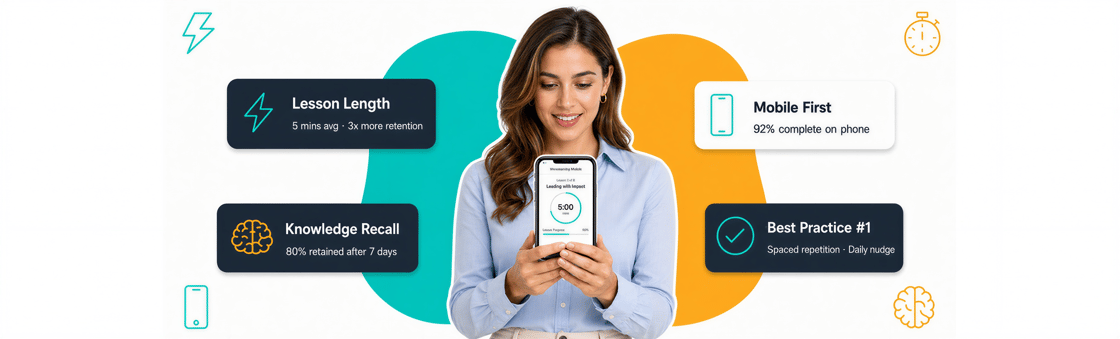
Corporate training has undergone a massive evolution. We are no longer living in an era where hour-long compliance videos and clunky slide decks cut it. Research shows that bite-sized, highly focused learning can boost knowledge retention by up to 50% and skyrocket employee engagement by up to 85%.
As we move deeper into 2026, creating effective employee training programs requires more than just making your videos shorter. It requires understanding exactly what your workforce needs at the exact moment they need it.
This is where a modern strategy comes into play: treating your learning platform's search bar like a search engine. By integrating internal keyword research into your Learning & Development (L&D) strategy, you can pinpoint the specific skills your team is trying to acquire and deliver the perfect content to match.
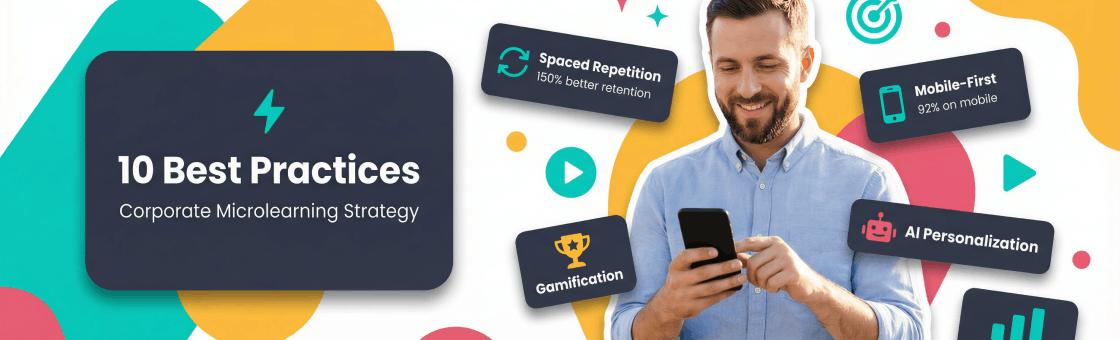
Whether you are launching your first corporate microlearning initiative or refining an existing strategy, these 15 proven rules from 5mins.ai will help you build learning experiences that drive measurable ROI and behavior change.

- Microlearning modules should be 3–7 minutes long — long enough to cover one concept completely, short enough to fit into any workday.
- Internal keyword research is the secret weapon of high-impact L&D teams. Analyzing what employees search for in your LMS reveals real skill gaps in real time.
- Mobile-first, TikTok-style design is no longer optional. Deskless and hybrid workers access training on their phones — your platform must meet them there.
- Spaced repetition and just-in-time delivery dramatically improve knowledge retention compared to one-and-done traditional training.
- AI-powered personalization ensures every learner gets content relevant to their role, search history, and skill development goals.
- Data analytics should drive your entire L&D strategy — from identifying skill gaps to measuring behavior change and ROI.
What is Microlearning and Why It Matters in 2026?
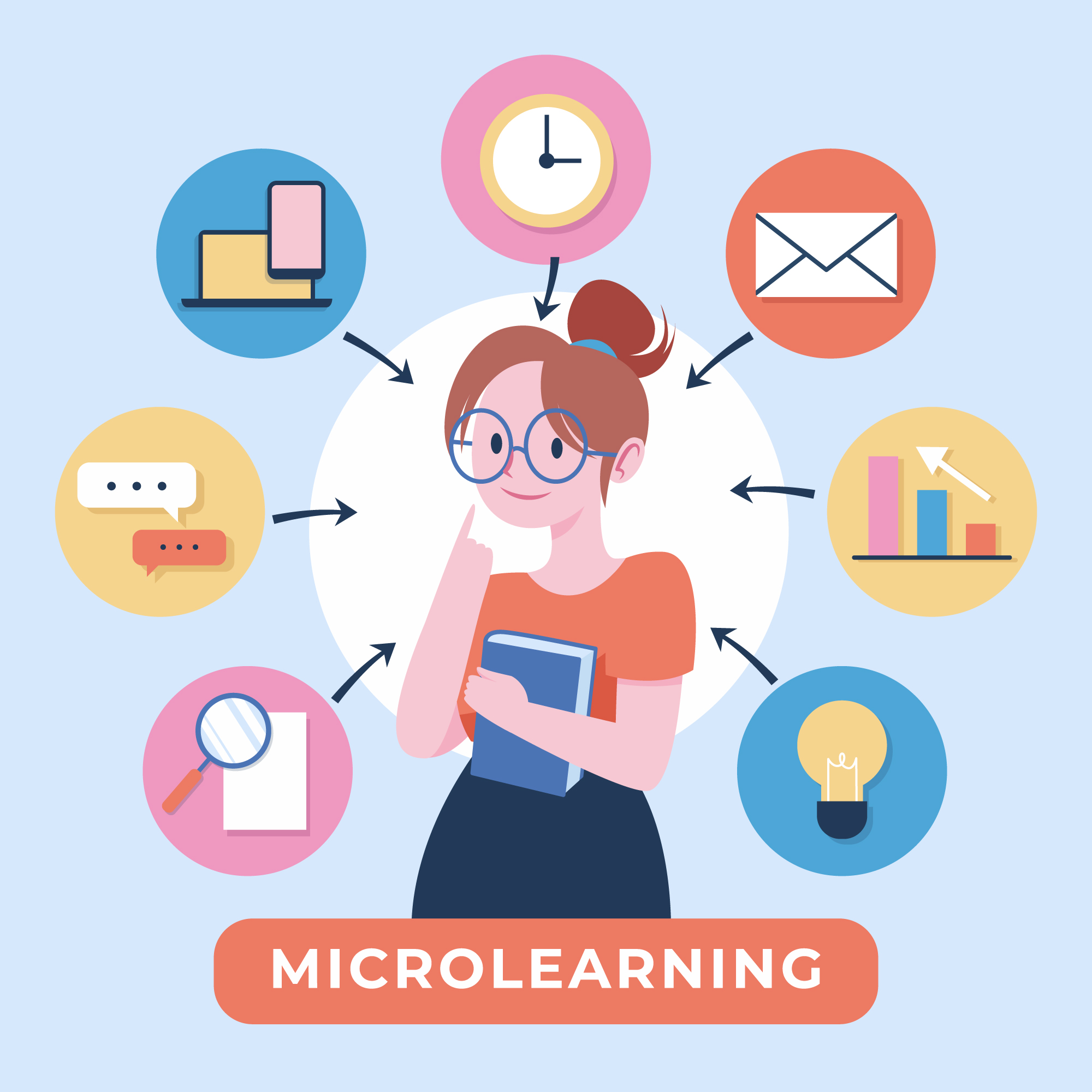
At its core, microlearning breaks complex, overarching topics into highly focused segments that learners can complete in short, manageable sessions. Each module targets a single, specific learning objective and typically takes 3 to 7 minutes to complete. This approach perfectly aligns with how the human brain naturally processes, chunks, and retains information.
In 2026, the modern workforce is overwhelmed by notifications, emails, and meetings. Asking an employee to block out two hours for a course is a recipe for low completion rates. Modern AI-powered microlearning platforms solve this by relying on three core cognitive principles:
- 1Chunking
Dividing heavy information into digestible pieces that the brain can process and store effectively.
- 2Repetition
Reinforcing these segments over time to combat the "forgetting curve" and cement long-term knowledge.
- 3Recall
Prompting learners to actively apply their knowledge through quizzes and real-world scenario practice.
Here is how you can build a cutting-edge microlearning strategy this year.
1. Target Specific Employee Needs with Internal Keyword Research
Before you spend time and budget creating a new training module, look at the data. Use internal keyword research to see what your employees are actively searching for within your LMS (Learning Management System) or company intranet. Are they searching for "how to give feedback" or "conflict resolution"? Let their search queries dictate your content calendar. This ensures your corporate microlearning content remains highly relevant, directly answering their most pressing questions rather than guessing what the L&D team thinks they need.

The most effective L&D teams review their platform's search analytics at least monthly. The queries your employees type in are a live, real-time signal of what your business actually needs — far more accurate than any annual training needs analysis.
2. Optimize Module Titles and Tags for Discoverability
If your content isn't searchable, it doesn't exist. Make your training materials incredibly easy to access by using your keyword research to craft descriptive, SEO-friendly titles and metadata tags for your modules. If your sales team is searching for "handling angry customers" rather than "advanced de-escalation techniques," use their exact keywords. Speak their language so they can find the just-in-time training they need instantly.
3. Design for Mobile-First, TikTok-Style Learning
Desktop-only training is a thing of the past. Mobile phones are the most common way learners access training, especially for deskless or hybrid workers. Designing for mobile-first means considering how content appears on smaller screens from day one. The 5mins.ai platform is built on a TikTok-style gamified learning experience. By utilizing vertical video, intuitive swiping, and fast loading times, you guarantee seamless employee engagement, no matter where your team is working.
4. Identify Corporate Skill Gaps via Zero-Result Searches
Review your learning platform's internal search analytics regularly. When employees search for specific keywords (e.g., "AI prompting," "new compliance software," or "Q3 sales playbook") and get zero results, you have just uncovered a critical skill gap in real-time. Use this "zero-click" keyword data to prioritize your content creation pipeline and stay ahead of organizational needs.

A zero-result search is not a failed search — it's a direct request for content that doesn't exist yet. These are the highest-priority gaps in your L&D library. Build a process to review them regularly and fast-track the most common ones into your content pipeline.
5. Leverage Spaced Repetition for Maximum Knowledge Retention
People lose the majority of newly learned information within a matter of days unless they actively review it. You can combat this memory decay by automating spaced repetition through your learning platform. Schedule brief, keyword-targeted review quizzes at strategic intervals — 24 hours, one week, and one month after the initial learning session. This AI-driven microlearning best practice ensures long-term retention compared to traditional one-and-done training.
6. Create Search-Intent-Driven Learning Objectives
Every piece of training content should answer a specific user query. Frame your learning objectives around the "search intent" of the employee. What exact problem are they trying to solve with their keyword search? Are they looking for a quick transactional fix, or deep foundational knowledge? Address that core need and establish the value proposition within the first 30 seconds of your microlearning video.
7. Use Multimedia and Gamified Interactive Elements
Mixing text, images, videos, and audio creates a richer, more immersive learning experience. Elevate highly-searched training topics by pairing them with interactive elements like drag-and-drop activities, quizzes, and scenario-based questions. Gamification transforms passive viewing into active, engaging learning, providing immediate feedback that helps correct misunderstandings on the spot.
8. Align Bite-Sized Learning with Real-World Applications
Ensure your modules address the real-world, daily scenarios behind a learner's keyword search. If they search for "time management," don't just give them theoretical concepts. Give them actionable, role-based takeaways — like how to use the company's specific project management software to block time. Specific, actionable takeaways drastically increase the chance that training translates into improved job performance.
9. Organize Content into Logical Keyword Clusters
Structure your course library using "topic clusters" based on your keyword research. Instead of a random assortment of videos, create dedicated learning paths. Grouping related microlearning modules together helps learners seamlessly transition from basic definitions to advanced, specialized skills. Clear categorization makes navigation intuitive and mirrors how modern search engines group information.
10. Track Engagement Metrics by Keyword Topic
Move beyond basic completion rates — they don't tell the whole story. Analyze which keyword categories and topics drive the most return visits, highest watch times, and best quiz scores. This behavioral data tells you which topics truly resonate with your workforce, where your skill gaps are closing, and where you should invest more of your L&D budget moving forward.

Focus on return visit rate, quiz score improvement over time, and time-to-competency by topic cluster. These behavioural signals tell you far more about true knowledge gain than a simple completion percentage ever will.
11. Personalize the Employee Learning Experience with AI
Use an employee's search history, job role, and keyword interests to build adaptive, personalized learning paths. If an employee frequently searches for "leadership development" or "Excel macros," an AI-powered learning platform like 5mins.ai can automatically recommend relevant, role-based micro-courses straight to their feed. Personalization ensures that employees aren't wasting time on training that doesn't apply to them.
12. Integrate Just-in-Time Microlearning into Daily Workflows
Just-in-time training delivers content exactly when and where people need it. By matching your microlearning modules to the specific keywords tied to an employee's current workflow (for example, triggering a quick tutorial when they open a new CRM feature), they can learn in the flow of work. This eliminates the need for disruptive, hour-long seminars that pull them away from their actual jobs.
13. Use Storytelling and Realistic Workplace Scenarios
Embed your targeted keywords naturally into engaging stories and realistic workplace scenarios. Framing a compliance or safety training module within a relatable, story-driven narrative makes the content infinitely more memorable than a standard corporate slide deck. Storytelling builds empathy and helps employees visualize how to apply the training in real life.
14. Update Content Based on Trending Industry Keywords
The corporate skills landscape changes rapidly. To keep your L&D program fresh, regularly perform external keyword research to identify emerging trends in your industry. Are competitors adopting new technologies? Are there new compliance regulations or Gen AI tools dominating industry search trends? Identify these shifts early and update your microlearning library proactively to stay ahead of the curve.
15. Leverage Data Analytics and AI for Continuous Improvement
Modern learning doesn't stop at delivering content; it evolves through constant insights. By leveraging data analytics and AI, organizations can identify patterns in learner behavior, measure content effectiveness, and adapt training in real-time. 5Mins.ai uses these insights to continuously refine your microlearning strategy, ensuring that every lesson becomes smarter, more relevant, and more impactful over time.
Frequently Asked Questions
Everything you need to know about microlearning best practices in 2026.
 Sources
- The Science of Microlearning, Journal of Educational Technology, 2023. Research on bite-sized learning and knowledge retention rates.
- Employee Engagement and Learning, Gallup Workplace Report, 2024. Data on engagement improvement through modern learning methods.
- Mobile Learning Trends Report, Brandon Hall Group, 2025. Mobile-first learning adoption rates and engagement data.
- Spaced Repetition and Long-Term Memory, Cognitive Science Quarterly, 2023. Research on spaced repetition effectiveness versus traditional training.
- AI in Learning & Development, Deloitte Human Capital Trends, 2025. Personalization and AI adoption in corporate training.
 This article is for informational purposes only. Statistics cited are based on industry research and may vary by organization and context. Organizations should evaluate microlearning approaches based on their specific workforce needs.
All content is researched and written by the 5Mins team.



Saurav Chopra







_transparent%20background.png)



.png)