
CapabilitiesManage, engage, create, grow and prove
 Learning Management System (LMS)Manage and automate all your training
 Learning Experience Platform (LXP)TikTok-style learning, in-built content
 AI StudioTurn any document into training
 Skills-based trainingMap skills, track competency and close gaps
 Reporting & InsightsAudit-ready proof of completion and skill
- AI-powered learning experienceDaily Picks, Hugo and AI across 5Mins
- TikTok-style feedMicrolessons people finish
- AI Course CreatorA full course from one document
- AI RoleplaysPractice real conversations with AI
- Native mobile appiOS and Android, with frontline login
- AutomationsEnroll and remind people automatically
Platform overview
One platform. Five capabilities. One AI intelligence layer.
 Compliance TrainingNever miss a regulation
 Leadership & Soft SkillsTurn high performers into multipliers
 Onboarding & Role-based TrainingAccelerate team ramp-up
 AI & Gen AI TrainingFuture-proof your workforce with AI skills
 Health & Safety TrainingTurn near misses into safer habits
 Sales & CS EnablementTraining that drives revenue
Solutions overview
Training for every team, finished in 5 minutes a day.

By categoryPick a training topic
 ComplianceNever miss a regulation
 Leadership DevelopmentTurn high performers into confident managers
 Soft SkillsBuild everyday people skills
 AI & Gen AIFuture-proof your workforce with AI skills
 Health & SafetyTurn near misses into safer habits
 WellbeingHelp people look after themselves and each other
 Sales & CS EnablementTraining that drives revenue


How Ivy Farm saved 20 training days while growing first-time managers
Ivy Farm swapped three-hour classroom sessions for self-paced learning and one group hour every two weeks. A cohort of 13 first-time managers saved about 20 training days.
 4.6
 4.7

 LMS
 LXP
What changed after switching to 5Mins
Ivy Farm put its first cohort of new line managers through a flipped classroom program on 5Mins. Debra's estimates cover that cohort.
of training time saved
Debra's estimate across the cohort of first-time managers.
first-time managers through the program
The first cohort of new line managers to complete it.
every two weeks, not half-day sessions
A focused group session where managers discuss and debate the topic.
of program design time saved
Debra's estimate for using a ready-made program instead of building one from scratch.
Figures from Debra Syme's interview and Ivy Farm's customer story.
Classroom training was a heavy lift for a startupSelf-paced learning with one group hour every two weeks
Finding a time when everyone could attend the same three-hour session was near to impossible. Managers needed to upskill but did not have the time.Managers learn in their own time, then meet as a cohort every two weeks to discuss case studies that came ready to use.
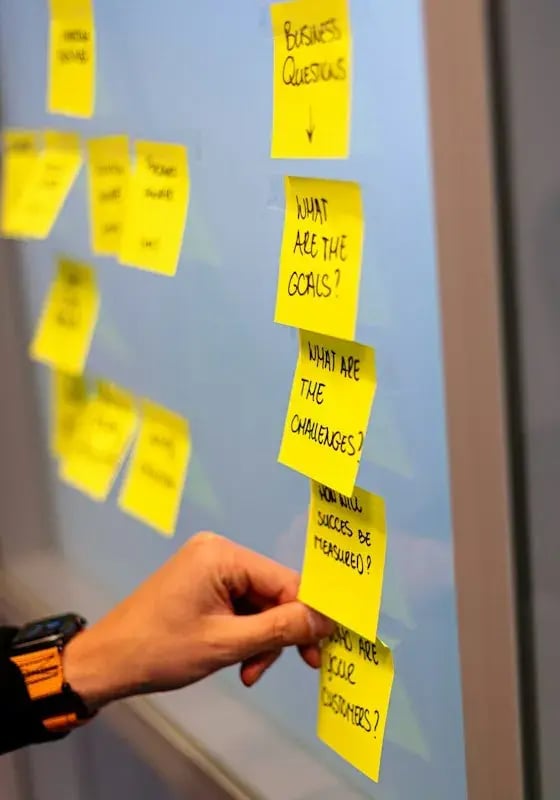 Scheduling
Same three hours for everyone
Finding a time when everybody could attend a three-hour session was near to impossible.
 Isolation
Learning alone
Learning in isolation was one-dimensional and quite lonely.
 Waiting
The next course is months away
Waiting for a course to run in the workplace could mean a wait of two months.
 Preparation
Building sessions from scratch
Designing training from scratch means research and sourcing videos that do not overlap.

Debra Syme, Chief People Officer, Ivy Farm"Training was always seen as a bit of a heavy lift. It was quite traditional, very classroom, very face to face. Trying to find a time when everybody could do the same three hours or whatever it was was near to impossible."
Debra Syme, Chief People Officer, Ivy Farm"Having the platform has enabled the managers to fit the training in when they wanted it. This new line manager program has meant that it's given them a focused one hour every fortnight where they know they need to come together."
"The line manager came to me and said "I want to sense check my approach with you." I felt like doing a little happy dance, because it meant they'd got the confidence in the techniques that they'd learned. They had a whole plan. They had their approach, and they knew how to attack the situation in the right way."
How the flipped classroom runs
Managers learn first on their own, then come together every two weeks to put it into practice.
Learn at your own pace
Managers work through the learning when it suits them, on a laptop or a phone.
Meet every two weeks
The cohort comes together for one focused hour to discuss and debate the topic.
Case studies as the agenda
Debra splits the group into pairs or threes to work through case studies, then they feed back with scenarios from the business.
Build on last time
Managers carry terminology from earlier sessions into the next, which shows the building blocks working.
Debra Syme, Chief People Officer, Ivy Farm"I would tailor it a little bit to our business with some terminology or some slightly different wording, and then we would use that as a regular drum beat for every time we met. So they knew what they were walking into."
A shared language and more confident managers
Debra sees the cohort growing together, as well as the individual managers.
A shared vocabulary
The phrase "plusing" is now part of the cohort's vocabulary, and managers feel supported by the training and by each other.
Managers arrive with a plan
On a difficult performance conversation, a line manager came to Debra to sense check their own approach, not to hand over a problem.
Read the interview
Prefer to read? Here are Debra's answers from the filmed interview, question by question.
Ivy Farm customer story: interview transcript8 questions, about 6 minutes to read
Challenges for new managers
Interviewer: Before using 5Mins, what challenges did new managers face, and how has the program addressed these gaps?
Debra Syme: Before we had a learning platform, training was always seen as a bit of a heavy lift. It was quite traditional, very classroom, very face to face. Trying to find a time when everybody could do the same three hours or whatever it was was near to impossible. It was like herding cats. And especially in a startup environment where you are turning to each new priority quickly and pivoting, it was near to impossible.
So we needed to find a way that would work with our colleagues and enable them to learn at their own pace and in their own way, because they needed to upskill but they didn't have the time. So having the platform has enabled the managers to fit the training in when they wanted it. And the great thing about this new line manager program has meant that it's given them a focused one hour every fortnight where they know they need to come together. That's not a heavy lift. One hour a fortnight, not a problem. And that's really worked for them.
The flipped classroom
Interviewer: How did the flipped classroom approach, watching the module beforehand and then having a team discussion every fortnight using the case studies and open-ended questions, affect learning and behavior change?
Debra Syme: It's really worked so well because they learn at their own pace. They can learn in their own time and that's convenient for them with their workloads. But learning in isolation can be one-dimensional and quite lonely. They were very aware that they needed to learn but they also wanted to learn from others.
So they learned at their own pace and then coming together and discussing and debating the topic grew their knowledge in a very different way in terms of bringing it to life, which was incredibly helpful for them. And to see them on that fortnightly basis build and grow and build on the learning from the previous week and use that terminology and bring it into the next session was just a delight, because it showed that the building blocks of the program were working. The phrase plusing is now part of their vocabulary.
Changes in first-time managers
Interviewer: What changes have you seen in your first-time managers since completing the program?
Debra Syme: I think it's the shared experiences. They've gone through something that others haven't gone through. So the cohort, that shared experience and building relationships and common language, we've seen the individuals grow but we've seen the cohort grow as well. They feel supported by the training, they feel supported by their colleagues, and they're using that language and approach. Their confidence has grown and it's taking them to a next level, which is fantastic.
Leadership skills in practice
Interviewer: Which leadership skills improved the most, and can you share a real example?
Debra Syme: I definitely can, and this only happened in the last three days so it's very fresh. It's around having difficult conversations and those performance conversations. Typically any manager would have come to me and said I've got a problem and they would have come to me to solve it. But in this instance the line manager came to me and said I want to sense check my approach with you.
And I felt like doing a little happy dance, because it meant they'd got the confidence in the techniques that they'd learned to approach it their own way. They had a whole plan. They had their approach, and they knew how to attack the situation in the right way, in a confident way, in a professional way, and in a way that was going to land well with the individual. The stepped approach was just fantastic. And I just needed to rubber stamp it and give it a tick. So it was great.
The biggest benefit
Interviewer: If you were recommending the program to another company, how would you describe the biggest benefit of using 5Mins for manager or leadership training?
Debra Syme: For me and for us as a business, we're all busy. Our lives are just getting busier. And the luxury to sit down for half a day to do a session and train on something is very few and far between, especially in the crazy world of a startup like we are. All our employees are in control of their own training. They can pick their own topics. The line managers of the individuals can direct their training as well. It's a tool in a suite that they can turn to if they don't know what to do. Let's have a look on 5Mins and see if that helps.
The bite-sized nature of the training means that they can either do it on the laptop, do it on their phone, do it on the bus on the way to work, on the train or what have you. And it just makes it accessible in a way that training has never been accessible before. If they were waiting for a course to happen in the workplace, it could be, oh, there's one in two months' time. No, I can get straight on there and I can do something immediate to upskill myself, which for the younger generation coming through with all their TikToks and Snapchats, that instant access is invaluable.
Time saved
Interviewer: How much time did you save by using the ready-made case studies, open-ended questions and the program structure itself?
Debra Syme: It's a really hard one to answer how much time I've saved, but I think it could run into tens of hours. If you're going to design a training on any topic from scratch, you'd have to do all your research, you've got to make it creative and find different avenues to go down to engage different learning types. Having a ready-made package on 5Mins meant that I didn't have to go and source all the different learning videos, sense check if they cross over each other, check for suitability, check for relevance. Having it tailored and there and ready-made saved hours, and I would find it really difficult to put a number on it.
I can put a number on the training hours for the individuals that we've saved. On this particular cohort we put 13 people through it, and if I was going to do half a day training on each topic, three hours per person, we can do the maths on that. In total, we've probably saved about 20 training days. Invaluable in a startup where there's just not enough hours in the day.
Case studies and prep
Interviewer: We shared open-ended questions and case studies to give you an agenda for each meeting. How useful was that?
Debra Syme: That's been fantastic, because I didn't have to think about the prep for those sessions. I would go through what you had provided to me, which was invaluable. I would tailor it a little bit to our business with some terminology or some slightly different wording, and then we would use that as a regular drum beat for every time we met. So they knew what they were walking into.
I would split them into pairs or threes and they would go through the case studies and then they'd feed back to each other with relevant scenarios for our business. Again, I didn't have to think about that too much. In the morning I could go into the shared spreadsheet, tidy it up a little bit to what I needed and then take it into the session. So again, saved so much time.
What worked best
Interviewer: Which parts of the program were the most useful for you?
Debra Syme: All parts were useful and many, I can't pick out one. What was most useful is how it all has come together seamlessly and the flow of it.
All elements supported each other and built on each other, which was great to see, and that, as I said earlier, has flowed through, and so I can see the building blocks of the learning of our people, and I can see the growth and development of our new line managers and how they're growing as individuals, so there wasn't any one part of the course that was more valuable than any other.
See how other teams develop their managers



Develop new managers without losing days
Self-paced learning plus one short group session kept Ivy Farm's managers moving. Most customers are live in 2-4 weeks.