
CapabilitiesManage, engage, create, grow and prove
 Learning Management System (LMS)Manage and automate all your training
 Learning Experience Platform (LXP)TikTok-style learning, in-built content
 AI StudioTurn any document into training
 Skills-based trainingMap skills, track competency and close gaps
 Reporting & InsightsAudit-ready proof of completion and skill
- AI-powered learning experienceDaily Picks, Hugo and AI across 5Mins
- TikTok-style feedMicrolessons people finish
- AI Course CreatorA full course from one document
- AI RoleplaysPractice real conversations with AI
- Native mobile appiOS and Android, with frontline login
- AutomationsEnroll and remind people automatically
Platform overview
One platform. Five capabilities. One AI intelligence layer.
 Compliance TrainingNever miss a regulation
 Leadership & Soft SkillsTurn high performers into multipliers
 Onboarding & Role-based TrainingAccelerate team ramp-up
 AI & Gen AI TrainingFuture-proof your workforce with AI skills
 Health & Safety TrainingTurn near misses into safer habits
 Sales & CS EnablementTraining that drives revenue
Solutions overview
Training for every team, finished in 5 minutes a day.

By categoryPick a training topic
 ComplianceNever miss a regulation
 Leadership DevelopmentTurn high performers into confident managers
 Soft SkillsBuild everyday people skills
 AI & Gen AIFuture-proof your workforce with AI skills
 Health & SafetyTurn near misses into safer habits
 WellbeingHelp people look after themselves and each other
 Sales & CS EnablementTraining that drives revenue


How Channable cut leadership training time by 83% and kept every group
Channable replaced monthly half-day classroom blocks with a flipped classroom built on short 5Mins content. Training time fell by 83%, and nobody quit the voluntary groups.
 4.6
 4.7

- Industry
- SaaS
- Employees
- 200+
- Location
- Utrecht, Netherlands
- Uses 5Mins for
-
 LXP
What changed after flipping the classroom
Channable moved its leadership program to short pre-work and peer learning groups. The groups are voluntary, and here is how they have held up.
less training time
From 24 hours of half-day classroom blocks to about 4 hours.
of managers stayed in the groups
Nobody quit after the first six months, and more people joined by word of mouth.
of pre-work before each discussion
Scott keeps the homework to 15 minutes, 20 at most.
between peer learning sessions
Managers meet for about an hour and put ideas into practice in between.
Figures from Channable's L&D team.
Leadership training that cost a full day per monthShort pre-work, then candid peer discussion
Channable had no clear leadership expectations. Its classroom program took half-day blocks and was hard to run for a group this eager.Managers now watch up to 15 minutes of curated content, then meet in peer learning groups to test the ideas against how Channable works.
 Leadership
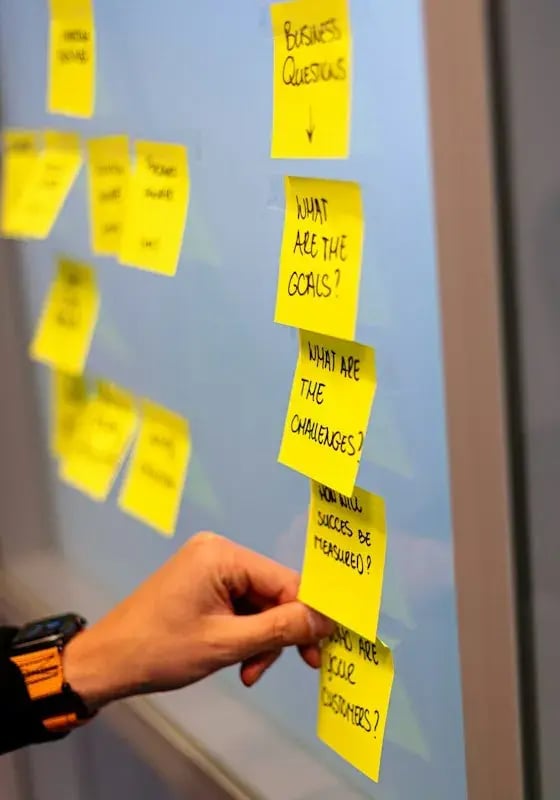
No clear expectations of leaders
Everyone had their own idea of a leader, and training was not tied to an overall goal.
 Time
24 hours in the classroom
Half-day blocks once a month over a six-month program.
 Logistics
Hard to get everyone in the room
People missed sessions and there was no way to catch them up.
 Engagement
A program that felt too important
People cared so much about being there that logistics got harder.

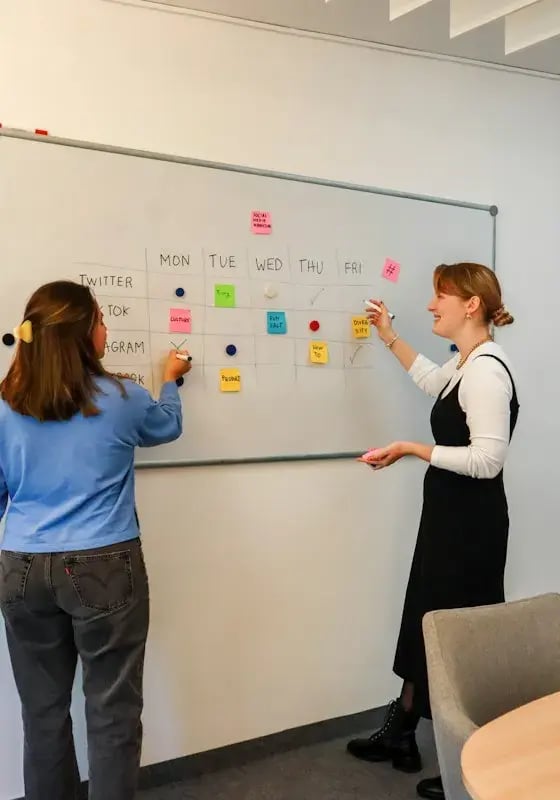
Scott Brinkmeyer, Learning and Development Manager, Channable"Because we expected everybody to go through it, doing it in person made it almost impossible to have everyone actually be in the room."
Scott Brinkmeyer, Learning and Development Manager, Channable"So not only is our time decreasing but the quality of that time is increasing."
"What I really appreciate is how candid people feel they can be. If you get this really concentrated shot of something and you have this agreement or this disagreement with it, if it's real quick, it's easier to talk about that and be direct about it and speak to the point."
A flipped classroom, step by step
Scott set up peer learning groups for managers, mixed across departments and years of experience.
Managers pick the topic
Topics come from the managers themselves, not from a list of what leadership wants them to know.
Curated pre-work
Scott shares the topic with the 5Mins team, picks the content that fits Channable, and keeps homework to 15 minutes or less.
An hour of discussion
Groups meet every six weeks to debate the ideas, share experiences and challenge each other.
Practice in between
Managers apply the ideas between sessions, where Scott says the real learning happens.
Scott Brinkmeyer, Learning and Development Manager, Channable"So we spend an hour in discussion that's all spurred by this 15 minutes at most video going on, and they all get their own takeaways there."
Groups that people choose to keep
The groups are voluntary, and the signs of momentum came from the managers themselves.
managers quit the groups
Scott opened sign-ups six months after the first groups and let people stop if they wanted to. Nobody did, and more people joined.
Teams chose to meet in person
Some groups started meeting in the office on their own because of the quality of the discussion.
Scott's advice to other L&D leaders
"In this case with such a low risk, you can just say, 'Hey, can we just give this a shot? I need 20 minutes of your time to sign up, watch some videos and then I'm going to take it from there.'"
Read the interview
Prefer to read? Here are Scott's answers from the filmed interview, question by question.
Channable customer story: interview transcript9 questions, about 10 minutes to read
Before 5Mins
Interviewer: Before implementing 5Mins, how would you describe your leadership development approach, and what challenges were you facing?
Scott Brinkmeyer: One of our challenges was that we didn't have clear leadership expectations. So everybody had an idea in their mind of what a leader should be, but we didn't have clear expectations that we could develop towards. Before I arrived, we did some general trainings here, based on general leadership skills, but not necessarily tied to an overall goal or an overall picture. So we were really lacking that before.
Half-day blocks
Interviewer: Your previous approach was in person and needed half-day blocks. How much time were leaders dedicating, and what was the impact?
Scott Brinkmeyer: They were doing a half day, so the overall program was for six months. They would do that once a month. So we had 24 hours, basically a full day of their life. There was a bit of homework ahead of time where they would watch some videos or read an article, and there would be discussion afterwards. But because that was the first thing that we offered, it felt very important for people, and because we expected everybody to go through it, doing it in person made it almost impossible to have everyone actually be in the room. Life happens.
We had people who couldn't be there on a certain day and really felt like they were missing out, and there wasn't really a way to catch them up on that either. It felt much more important than what we wanted it to be, and that actually made it more difficult for logistics, because when people really care about being there, it makes it even more challenging to try and keep everybody happy. It made it more of a challenge that we had such a big, eager group.
Discovering 5Mins
Interviewer: How did you first discover 5Mins, and what stood out about the bite-size approach?
Scott Brinkmeyer: Our CFO met someone from your company at an event somewhere. When I was talking with him about different things I was looking into, he recommended it. One of the things I really liked was the shorter bits, the bite-size aspect of it, because we were looking at other online learning libraries as well. We knew that in person wasn't going to work for us from a logistics standpoint. We also have offices in other locations, so we wanted to do things more online or asynchronous. But when I was looking at other learning libraries, it would still be, here's a course that you can do in half a day. In my experience, even doing that on your own, it gives it a bit of extra weight, both in terms of the amount of time that you have to set aside to do it, but also what you're expecting to get out of it.
I've always been a big believer that it's great to bring in some outside ideas, but then the actual learning is in the application. So I think that new idea should be quite quick, and then more of the time should be spent on what the application is going to look like. When I was looking at other learning platforms I could imagine leaders are going to enroll in this course and then see that it takes them four hours or six hours to complete all of that. That's just going to fall further back on their calendar. And by the time they even get around to it, I can imagine they feel like, okay, I have a certificate now, but there are a few good things in there, but not six hours' worth of good things, which then I think is even less likely that they're going to sign up for another one. So I can imagine a real steep drop in participation with a platform like that. So I like the quickness of it.
It's very much aligned with my idea that it's great to bring in a new idea, but do it quick and then let people wrestle around with it, and that's where it really gains traction.
Launching with the leadership team
Interviewer: How did you introduce 5Mins to your leadership team, and what was their initial reaction?
Scott Brinkmeyer: Anytime that we're launching a new platform where you have to sign up for this thing and create a password, you already have some resistance: what is this, how long are we going to have it before it comes to something else. I like needing to meet that skepticism. It makes me need to be more convincing. Another part that I like about something asynchronous like this is that if you have an in-person trainer, they might be saying, 'this is one way to do performance conversations,' for instance. And if I'm in the room, even if I don't think that's going to work here at Channable, I'm still going to be polite to that person. I'm going to be a nice audience member.
With that extra bit of distance, it's okay for me if we come in and say, 'I thought that video was garbage.' But then we can talk about why is that video garbage, or why does that not fit with Channable, because we want to do things in a specific way. So what I wanted to do was get groups together where people could have those direct conversations and bring in their direct experiences. So I set up peer learning groups for our managers. They're very mixed across departments, across years of experience, and we pick a topic that came from them. It wouldn't be something I told them this is what we want you to know, but rather what do you want to know about?
I would then share that with the 5Mins team and they would send me some content. I would look through which ones do I think are the most aligned with Channable, or which ones do I think would even generate interesting discussion. If it's not fully aligned, we can do that alignment ourselves. I always go for less than 15 minutes of homework ahead of time for them. But we have a good discussion around it. Sometimes an idea isn't brand new but it's a good reminder for them, and then they want to have that discussion. So we can really talk about how this works at Channable or how this does not work at Channable, or they can even challenge each other.
Somebody would say, 'that will never work for my team.' And someone else can say, 'I think it actually would if you took this approach instead.' And they can have all that discussion for themselves, which is great. So we spend an hour in discussion that's all spurred by this 15 minutes at most video going on, and they all get their own takeaways there. It's really what I was hoping for.
The flipped classroom
Interviewer: Was the flipped classroom something you were considering before 5Mins, and what inspired it?
Scott Brinkmeyer: Flipped classroom is an example of one of those things where it was kind of my working idea. I never heard the name of it, and so when I heard it I thought, that's what this is, this collection of ideas rattling around in my mind. There's an actual name for it, and of course once you learn that you can even learn the more direct benefits or different applications for it.
The version of it that was existing in my mind is based on our previous training program. What people would have to do is watch a video ahead of time or read an article. They called it the pre-work, and it was, I think, most like five or 10 minutes, and we actually had really, really high levels of completion for the pre-work. So we knew people were excited. We knew that they could set aside a short amount of time. The training was pretty good, but for us the real value was being in the room together and hearing how other people do things. So I was looking at that and I was thinking, all right, our completion rates are really high for five or 10 minutes of work and the discussion is really great.
Do we need that middle part as much, or can we make that jump directly from that quick bit of learning to a good discussion, and let people have their own takeaways that we can then guide and facilitate? When I heard the name flipped classroom, I thought that's a really handy title for this mess in my mind at the moment, and it made it a lot easier to explain to other people as well.
Quality of discussion
Interviewer: How has the quality of discussion in your peer learning groups changed?
Scott Brinkmeyer: What I really appreciate is how candid people feel they can be. If you spend a big chunk of time in a training, and you didn't really get much out of it, or you already knew the parts, or you disagree with some parts, after all that you're not really going to go through and think point by point about the feedback. You're just going to think, that was a miss for me. Whereas if you get this really concentrated shot of something and you have this agreement or this disagreement with it, or this part that you don't think works, if it's real quick, it's easier to talk about that and be direct about it and speak to the point.
The introducer of the idea is out of the room. The video is a one-time thing, so there are no personal feelings involved. So we can just have a conversation directly of does this concept work for us here or not? And are there parts of it that we want to work here? And if that's the case, what do we do? I think the quickness creates an informality in a way that's really helpful for good discussion, because the ideas in there are really thought-provoking, but it's just like throwing something very quick on the table, and then people can really come around it, dig into it, and share their own thoughts and put their own experiences on top of it.
I think we're creating really good psychologically safe spaces in these ways, because people are more comfortable to speak honestly about their own experience and not feel like they got something right or wrong or misunderstood something. They're just saying, this is how it's worked for me or not worked for me. And through that we have also seen strong connections within our groups, even people meeting one-on-one outside of the groups because they're hearing some more shared experiences. So I would say it's improved the growth mindset of our leaders as well, to be able to have such candid discussion.
Time saved
Interviewer: How much time are your leaders saving compared with the previous half-day blocks?
Scott Brinkmeyer: We're down to meeting for an hour every six weeks. And for each of those, the required learning is, like I said, I try and max 15, maybe 20 if I think it's really good, but I do want the specificity of that topic. So now we're doing, I would say, 90 minutes of good discussion where they feel like that entire 90 minutes is really valuable every six weeks, versus a four-hour block once a month plus the pre-work for something that people would say is not great. So not only is our time decreasing, but the quality of that time is increasing.
The moments of the learning are in the application, and that's going to be happening in between those six weeks anyway. But the time that it takes us to get to having something to apply and to try out is much quicker. So we just lower the risk of wasting that time as well. At most we're wasting 90 minutes instead of four hours, which also puts their trust in it more, because then they think, okay, I can try this. As far as I know nobody's felt they've totally wasted their time. But even if they were, it's nicer to waste 90 minutes than four hours.
Measuring success
Interviewer: What metrics do you use internally to measure the success of the program?
Scott Brinkmeyer: We don't have much in terms of numbers. We are expecting to see some comments in upcoming engagement surveys about some of the topics we've covered. I will say one thing that we noticed as a measurement is that the groups we have are completely voluntary to sign up for. I opened the signups six months after the first ones, and that was also the moment that I would let them stop if they wanted to. I asked them for that initial commitment. Nobody quit the groups. We only had more people come in. So we had strong word of mouth to bring them in.
Anecdotally, I'm checking with people constantly about what they find to be the most effective, and we're hearing from our leaders across the board that these are very useful for them. They don't want to miss them. A lot of teams have done this themselves, not me asking for it, but have said, if we can, let's be in the office these days, because we're having such quality discussion out of these that we want to be together. I really try to keep a light touch on these, and I'm seeing the extra engagement coming from themselves and their own enthusiasm, which, for a group of managers, speaks quite loudly.
Advice to others
Interviewer: What feedback would you give to someone considering 5Mins, and would you recommend it?
Scott Brinkmeyer: Yeah, I would recommend it, because of the low risk, not only for me as somebody who's choosing this platform, but also for the group that I'm asking to engage with it. When you're asking a new group of people to engage with this, it's a big ask. But in this case with such a low risk, you can just say, 'Hey, can we just give this a shot? I need 20 minutes of your time to sign up, watch some videos and then I'm going to take it from there,' and you can really get up and running quickly.
Also, the content I got recommended from the 5Mins team, when I shared our expectations, and they shared a bunch of videos that I can go through ahead of time and make sure that the content aligned with us, because everything was prepared. It was also not a big time investment for myself. Because of that casualness that comes with speed, I think that lowered the risk and it let people take a chance on it more. And because of the flipped approach, where you're spending more time in discussion anyway, giving time and space to a skeptic voice is built into that. So with something like this where the risk is low, for the most part, there's not really a reason not to.
See how other teams developed their leaders

How BD streamlined learning at scale with 5Mins

How Ivy Farm transformed leadership development with bite-sized learning

How Linnk boosted onboarding and ROI with 5Mins
Give managers a leadership program they keep
Channable cut classroom time and got better conversations in return. Most customers are live in 2-4 weeks.