
CapabilitiesManage, engage, create, grow and prove
 Learning Management System (LMS)Manage and automate all your training
 Learning Experience Platform (LXP)TikTok-style learning, in-built content
 AI StudioTurn any document into training
 Skills-based trainingMap skills, track competency and close gaps
 Reporting & InsightsAudit-ready proof of completion and skill
- AI-powered learning experienceDaily Picks, Hugo and AI across 5Mins
- TikTok-style feedMicrolessons people finish
- AI Course CreatorA full course from one document
- AI RoleplaysPractice real conversations with AI
- Native mobile appiOS and Android, with frontline login
- AutomationsEnroll and remind people automatically
Platform overview
One platform. Five capabilities. One AI intelligence layer.
 Compliance TrainingNever miss a regulation
 Leadership & Soft SkillsTurn high performers into multipliers
 Onboarding & Role-based TrainingAccelerate team ramp-up
 AI & Gen AI TrainingFuture-proof your workforce with AI skills
 Health & Safety TrainingTurn near misses into safer habits
 Sales & CS EnablementTraining that drives revenue
Solutions overview
Training for every team, finished in 5 minutes a day.

By categoryPick a training topic
 ComplianceNever miss a regulation
 Leadership DevelopmentTurn high performers into confident managers
 Soft SkillsBuild everyday people skills
 AI & Gen AIFuture-proof your workforce with AI skills
 Health & SafetyTurn near misses into safer habits
 WellbeingHelp people look after themselves and each other
 Sales & CS EnablementTraining that drives revenue


How IKEN got 84-85% activation in week one on compliance training
IKEN replaced 30-page handbooks, repeated sessions and personal spreadsheets with short courses on 5Mins. 84-85% of colleagues activated in the first week, and the training took about 3 hours to design.
 4.6
 4.7

- Industry
- Legal Technology / Software
- Employees
- 50-100
- Location
- Bristol, UK
- Uses 5Mins for
-
 LMS
 LXP
 AI Studio
 Reporting & Insights
What changed after going live with 5Mins
IKEN's HR Manager had been running data protection training by hand. Chantelle Hazell describes the first weeks on 5Mins.
activation in the first week
Colleagues logged in to see what it was about.
to design the training
It lasts at least a year until the next update.
day learning streak
One manager has a streak of more than 30 days and wants his team top of the leaderboard.
colleagues on the platform
The one exception is on long-term leave.
Figures from Chantelle Hazell's interview.
Handbooks, spreadsheets and the same session six timesShort courses people choose to do
IKEN's data protection training meant long handbooks, hour-long sessions repeated by team and a spreadsheet for every person. Engagement was the main struggle.IKEN now mixes library content with its own, tracks completions in one place and lets colleagues fit learning around their day.
 Engagement
Data protection is a hard sell
Hours of PowerPoint on a topic nobody finds exciting was not working.
 Tracking
A spreadsheet for every person
Each person had their own, in different places, filled in by hand.
 Delivery
One hour-long session, six times
Data protection was split into teams, so the same session ran six times.
 Content
A 30-page handbook
The data protection and information security handbook ran to 30-odd pages.

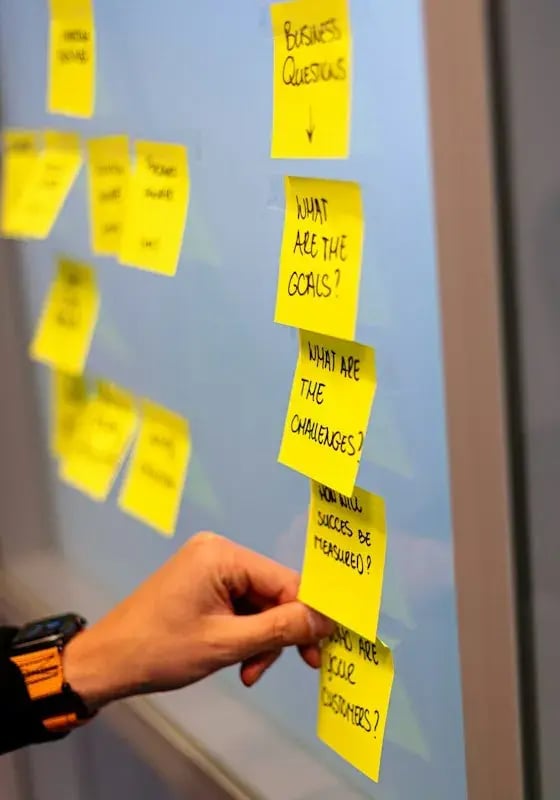
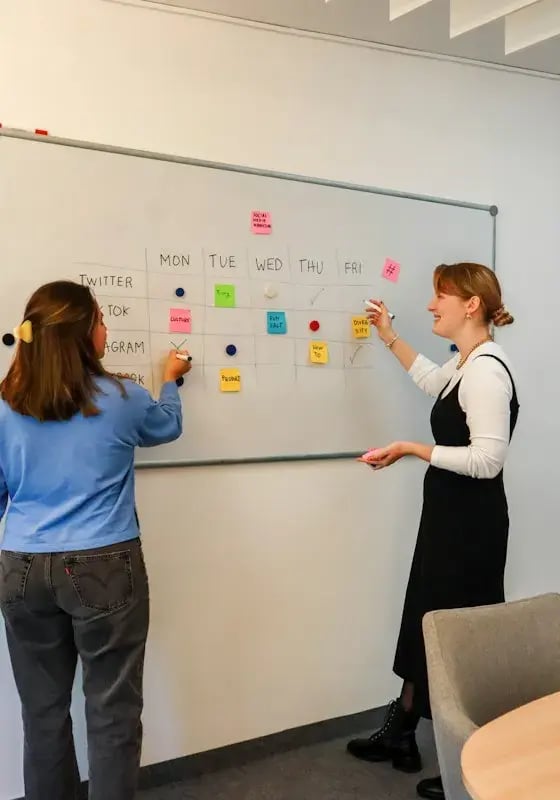

Chantelle Hazell, HR Manager, IKEN"We struggled a bit with engagement. We wanted to make the training fun and engaging, as they're not very exciting topics to talk about. Data protection is not a fun topic to talk about. Everyone's so busy, and getting them to sit down for a couple of hours just to look at a PowerPoint and be talked at just wasn't working."
Chantelle Hazell, HR Manager, IKEN"There were so many people that, if I was just having a normal conversation, they'd be like, "Oh, by the way, that 5Mins thing, I really, really enjoy it. It's fun to do." They were saying that they find it easy to slot into their day, which is one of the issues we were having."
"With this, it really helps them manage their own time. They don't have to sit and listen to someone drone on about a boring topic like data protection. It's like, okay, this is how it applies practically."
Colleagues were in within a week
Chantelle built IKEN's first training herself, and colleagues were curious enough to log in straight away.
Built in about 3 hours
Chantelle designed the first training herself, mixing library content with IKEN's own.
Curiosity in week one
84-85% of colleagues activated in the first week to see what it was about.
Learning fits the day
Some colleagues fit a session in before lunch, and others set aside the first 10 minutes of their day.
Flexible around the work
The development team fits courses around big releases, and anyone with a long day can double up the next.
Chantelle Hazell, HR Manager, IKEN"They have the deadline but it's fitting into what they're currently doing. Our development team, for example, if they've got a big release come, they can fit it in around that instead of being like, I'm going to take half a day out of your work time so you can sit and listen to me talk to you."
Onboarding is the next step
IKEN is still early on 5Mins, and Chantelle plans to bring onboarding fully onto it.
Onboarding on 5Mins
Full integration with onboarding is part of this year's plan. For now, videos cover the main points and the handbook stays available.
A look before external courses
When colleagues ask about an external course, Chantelle points them to 5Mins first and reviews afterwards.
Why Chantelle recommends 5Mins
"You've got the general rules that everyone needs to abide by, but we have specific things as well. So the ability to change that and customize it to what you need I think is definitely the main reason I would recommend."
Read the interview
Prefer to read? Here are Chantelle's answers from the filmed interview, question by question.
IKEN customer story: interview transcript10 questions, about 9 minutes to read
Before 5Mins
Interviewer: Before using 5Mins, what challenges were you facing with your training and compliance processes?
Chantelle Hazell: We struggled a bit with engagement. We wanted to make the training fun and engaging, as they're not very exciting topics to talk about. Data protection is not a fun topic to talk about. But we also struggled a bit with time, I think. Everyone's so busy, and getting them to sit down for a couple of hours just to look at a PowerPoint and be talked at just wasn't working. So I think those were the main challenges.
Onboarding and retention
Interviewer: Can you walk me through your experience with employee onboarding and retention before and after implementing 5Mins?
Chantelle Hazell: I don't think we've been using it long enough to look at the retention, because we've only had one person leave and that was two days after we launched it, so it's nothing to do with that. But we've had one individual onboard since we've been with you and he had great feedback on it. There was the data protection stuff and then we did the sexual harassment training. He was saying it was really easy to understand from the get-go. There was no, oh, how do I do this, how do I do that? And he said, based on onboarding from other companies he's been with, it was a lot slicker, a lot easier.
We haven't fully integrated 5Mins with our onboarding process. It's part of the plan for this year, but it's not fully there yet. A lot of the time it would be, oh, here's a ton of information that you need to read, or here's the data protection information security handbook that you need to sit and read through, which is like 30-odd pages and it's very boring. So to be able to give that training instead and be like, watch these videos instead of sitting and reading this handbook, is a lot, a lot better.
We still have the document and we still encourage them, if they have five minutes in their onboarding and they want to read it, then read it. But to get the main points across of what they really, really need to know, being able to do it that way has made it a lot easier.
We haven't actually fully utilized tracking yet at the moment. It's a plan to, once we make ours more fit for purpose. But before, it was just like, oh yeah, no, I read it. I'm like, okay, did you really? But you don't want to question that. Now we can see, okay, yeah, they've completed it, so it's a lot easier.
Reporting and tracking
Interviewer: What were your biggest frustrations in terms of reporting and tracking before implementing 5Mins, and what did you do before?
Chantelle Hazell: Being able to see clearly how long people have been spending their time on it, and say, okay, so-and-so did it for this amount of time, because beforehand we had a simple Excel spreadsheet that we asked them to fill out and obviously people didn't fill it out because they had too much to do. They couldn't remember what they'd done a month ago. So it's given us a bit of, okay, if we want to do a performance review, we can go back and look at the actual data that we don't have to rely on memory for, which is good.
Before, every person had their own spreadsheet, and it was all in different places. So it's me physically going in and being like, okay, that's what they've done, make a note of it. And with training as a whole, take data protection training as an example, we wouldn't do it as a whole company. We'd split it into teams, so the session's an hour long but I'm repeating that six times. It really adds in.
When I was designing the training, when we first onboarded with you guys, I think it took me possibly around 3 hours to get everything that we wanted in there. But then that will last at least a year until we update it again. So the time saving has been massive, very selfishly from my side, as I do all of this training constantly.
Engagement and activation
Interviewer: Did you notice any immediate improvements after implementation in terms of employee engagement or retention?
Chantelle Hazell: I think it was very clear to see their engagement with the platform. There were so many people that, if I was just having a normal conversation, they'd be like, "Oh, by the way, that 5Mins thing, I really, really enjoy it. It's fun to do." They were saying that they find it easy to slot into their day, which is one of the issues we were having, of everyone's so busy. They've got targets they need to meet. How do we fit that in? So there's quite a few people that say, "If I'm in between things and there's nothing, I do it before I go and take my lunch," or people will say that they specifically set aside time to do it, like the first 10 minutes of their day. They come in and log on and do that and then they get on with all the work. I think the activation rate was higher than I expected, to be honest with you.
At the moment I think we are all but one person, because he's on long-term leave. Everyone is in, except for that one person, which wasn't expected anyway. But within that first week I think we had maybe like 84, 85%. Everyone was like, "Okay, let's go log in and have a look and see what it's about." I think their curiosity, their inquisitiveness, was really like, okay, I've seen a little bit of it, I want to go and explore for myself. And then they found a couple of things. So there's a lot more engagement in learning than there was before. Definitely.
Continuous learning
Interviewer: Do you see people sharing content with each other or tagging each other in specific videos?
Chantelle Hazell: To be honest, I haven't actually looked and checked, but a lot of the time it's conversations that I overhear, like, "Oh, I was doing this thing and this is what it was." So it's a lot more anecdotal sharing than physical, but I haven't checked, if I'm completely honest. It might be that they're constantly tagging, but definitely anecdotal, talking to each other and saying, "I've seen this, maybe go and have a look at it."
Gamification
Interviewer: How do your employees feel about the gamification side of the platform, with skill points, assessments and charity donations?
Chantelle Hazell: Most people enjoy it. There was one person who I think emailed you with the question of can you get out of the leaderboard, because that's just who he is as a person. I fully expected it.
I think a lot of people are really engaging in it. I've had one manager in particular who is on something like a 31 day streak, 35 day streak. And he was like, "I'm going to make our team high on the leaderboard. They are going to win." So there was quite a bit of, okay, let's make it a competition, even though we said we can try it out and see how we want to do. They enjoy it. I don't think anyone's got to the point of redeeming their jewels. I have, because obviously I had access a lot sooner than other people did. But I think people are getting up there. They're doing it, which is exciting to see.
Features that saved time
Interviewer: Were there any specific features that helped you save time or reduce manual work in onboarding or compliance training?
Chantelle Hazell: To be honest, the thing that helped me the most was the amount of content already in the library. I'm going to keep going back to the data protection one, but we obviously had our own stuff, and there was already stuff there that was like, okay, here's a pre-made video that covers everything that you want, and you can mix it in with your own stuff.
That really helped, and I think it cut down a lot on my time in manually creating everything and making sure everything's up to date, because I don't need to worry about, oh, is that mention of a legislation correct, all that kind of thing.
I know it was good. There were no issues. From what we had, there was definitely, okay, how do I condense this kind of thing? I use AI for multiple things within the job, but it was very easy to say, this is what I want, break it down for me, make it more palatable for people, because it's just a normal Word document that I put into a PDF to be able to put in there. So being able to put it in there and add it in easily was great.
Cost
Interviewer: Has 5Mins helped your organization reduce any cost?
Chantelle Hazell: I don't think we've been using it long enough to be able to give an exact number, saying this is saving us this much. But there's a couple of things where some people have said, "Oh, I have an interest in doing this external course," and I'd say, "Okay, we'll have a look on 5Mins first. See if it's of interest to you, and then we'll review." I think it will help in the long run with, I don't want to say wasted time and resources, for external training. If someone has an interest and they go, "Oh, I'm going to go to this training session," and then they come out of it and they're like, "Well, actually that wasn't helpful at all, that's not what I wanted," then I think it helps mitigate that slightly. And the obvious one of planning and delivering training is, I think, the biggest cost saving at the moment.
Productivity and focus
Interviewer: Have the short courses improved your teams' productivity and their ability to focus on core work?
Chantelle Hazell: I think just the ability to be able to do it when they want to do it. So they have the deadline but it's fitting into what they're currently doing. Our development team, for example, if they've got a big release come, they can fit it in around that instead of being like, I'm going to take half a day out of your work time so you can sit and listen to me talk to you. I think that has helped quite a lot. And if, for example, they've had a long day and they're like, no, I really can't take in any more information, then you just double it up the next day, instead of being forced to sit and listen and try and engage that way.
Would you recommend it
Interviewer: Would you recommend 5Mins to others, and if so, what would be the main reason?
Chantelle Hazell: I mean, yeah, definitely. I think the main reason is because it is engaging. When you go to a training course, you've got all of the information just thrown at you all at once, like, this is the allotted time you have to take in all of this information and then go from there. Whereas with this, it's a lot more like you say, the cognitive ability they have at that point in time. It really helps them manage their own time. They don't have to sit and listen to someone drone on about a boring topic like data protection. It's like, okay, this is how it applies practically. We've been able to tailor it to what we need as an organization, because you've got the general rules that everyone needs to abide by, but we have specific things as well. So the ability to change that and customize it to what you need I think is definitely the main reason I would recommend.
See how other teams fixed compliance training

How Delamode shifted compliance training from a tick-box exercise to real engagement

How ICAB transformed 3-hour sessions into 25-minute wins

How Collingwood hit 100% compliance and saved a day per course
Make compliance training people choose to do
See how 5Mins enrolls, reminds and reports automatically, so training fits around the working day. Most customers are live in 2-4 weeks.